



Welcome to the definitive Child Development Course, designed for those who wish to profoundly understand the journey from a helpless newborn to a self-assured young adult. Whether you are an aspiring child psychologist, an educator, or a parent seeking to nurture your child’s potential, this course provides the academic rigour and practical insights you need to excel. Child development is a complex, multi-faceted process encompassing physical, cognitive, and social-emotional growth. In this course, we break down the stages of child development, exploring how genetics and the environment (nature vs. nurture) intertwine to shape a child’s future. You will delve into the pioneering theories of Jean Piaget on intellectual growth and Erik Erikson’s psychosocial stages, gaining a professional toolkit to identify and support key developmental milestones.
From understanding language acquisition and the “Language Acquisition Device” (LAD) to analysing the long-term impact of different parenting styles, our curriculum covers it all. We also tackle the modern challenges of adolescence, including self-esteem, stress, and the digital world, ensuring you are prepared to handle common behavioural issues with confidence and empathy.
What You Will Learn
- Foundations of Development: Define the legal and psychological boundaries of childhood and the core principles of growth.
- Developmental Milestones: Identify physical, cognitive, and social markers from infancy through to the school-age years.
- Cognitive Mastery: Understand how children process information, develop logic, and build memory schemas.
- Social & Emotional Intelligence: Explore the formation of trust, autonomy, and identity through Erikson’s developmental crises.
- The Power of Environment: Analyse how family, nutrition, exercise, and geography influence a child’s trajectory.
- Parenting Dynamics: Evaluate Authoritarian, Authoritative, Permissive, and Uninvolved parenting styles and their outcomes.
- Language & Literacy: Trace the journey of communication from first babbles to adult-like conversations.
- Moral Reasoning: Study the transition from heteronomous to autonomous morality in young children.
Why Should You Take This Course?
- Evidence-Based Insights: Learn from established psychological theories and contemporary medical understanding.
- Early Intervention Skills: Gain the ability to spot developmental delays early, allowing for timely support and better outcomes.
- Career Advancement: Enhance your professional profile for roles in childcare, education, or social work.
- Practical Parenting Tools: Discover how to adapt your style to a child’s unique temperament for a more harmonious household.
- Holistic Approach: Move beyond just “physical growth” to understand the “qualitative changes” leading to maturity.
Who This Course Is For
- Aspiring Educators & Nannies: Those looking to build a career in early years or primary education.
- Childcare Professionals: Individuals working in nurseries or community centres who want to formalise their knowledge.
- Parents & Caregivers: Anyone wanting to better understand their child’s “why” and support their milestones.
- Psychology Students: Students requiring a solid foundation in developmental and educational psychology.
Course Content
Introduction to Child Development
-
Introduction to Child Development
Factors That Influence Development
Cognitive Development
Social and Emotional Development
Personality and Intellectual Development in Children
Stages of Language Development
Understanding Moral Development
Problems in Childhood & Adolescence
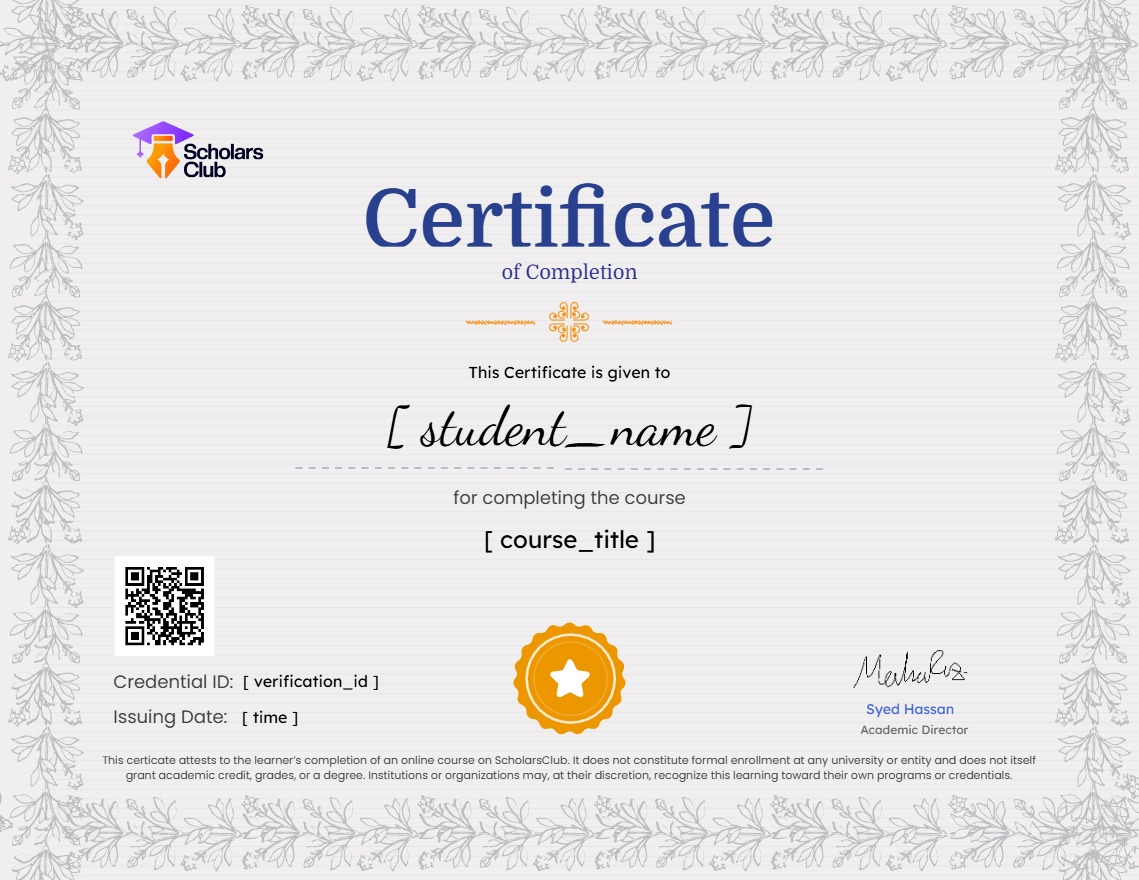
Earn a certificate
Add this certificate to your resume to demonstrate your skills & increase your chances of getting noticed.
A course by

Student Ratings & Reviews

 Lessons: